Download the App and manage your eSIMs easily
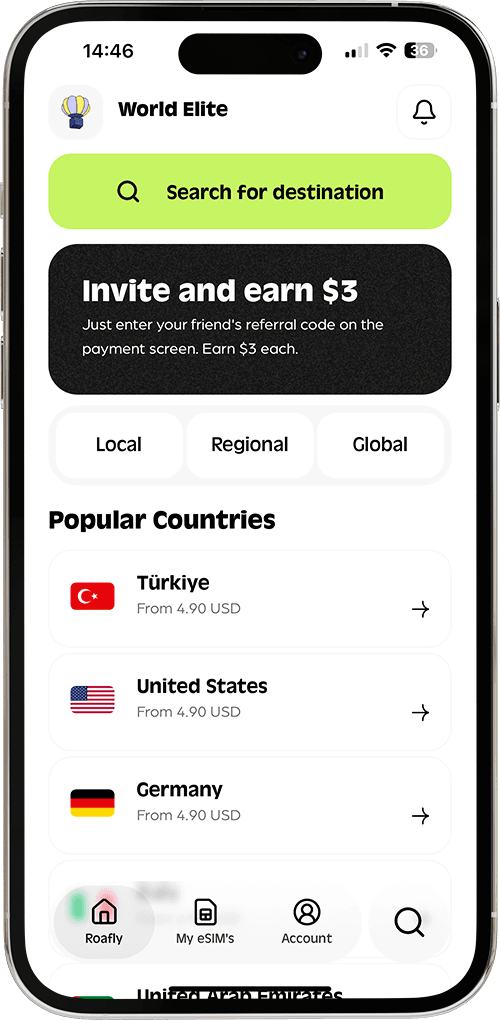
Create your order quickly
See your eSIM details
Track your remaining data
Download the App and manage your eSIMs easily
Create your order quickly
See your eSIM details
Track your remaining data
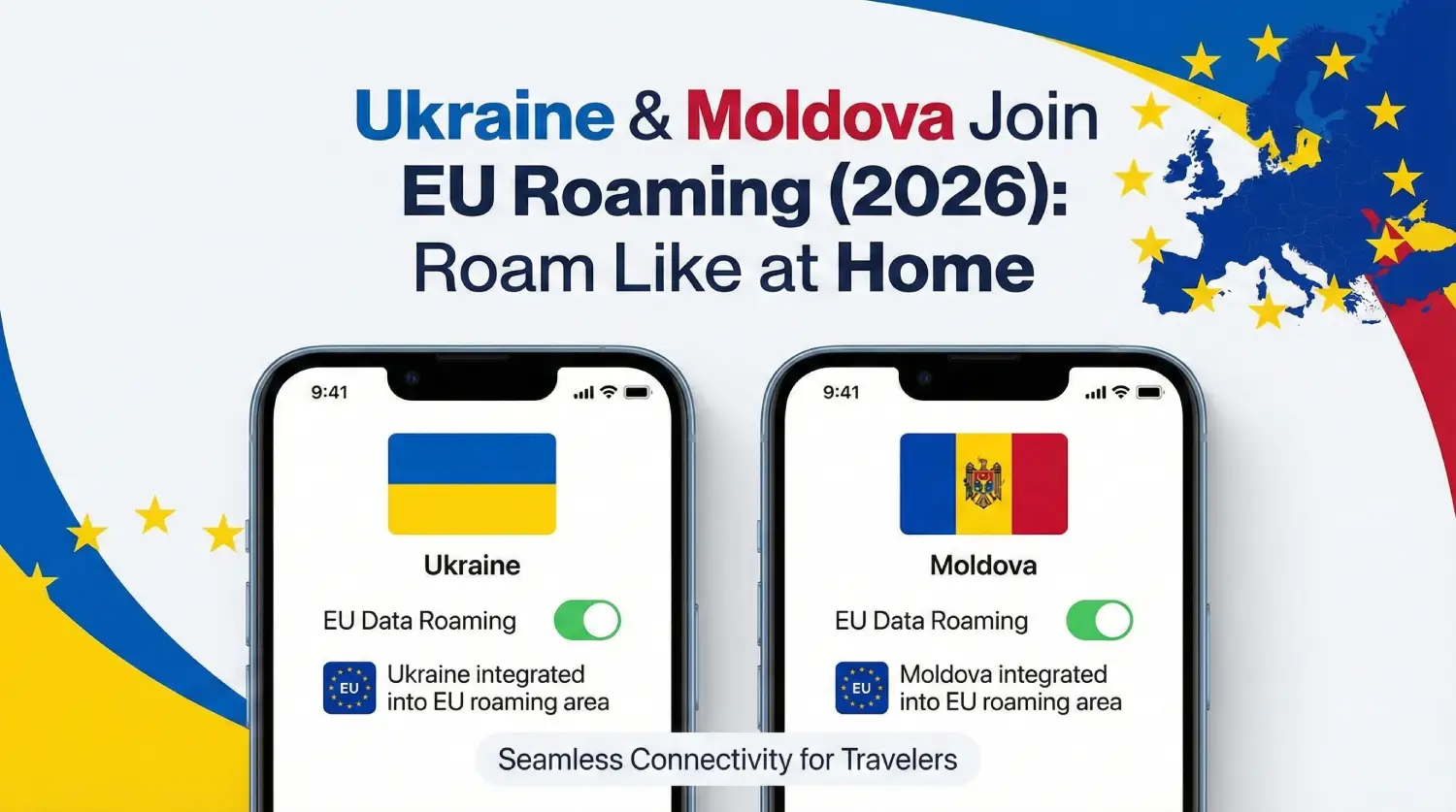
Starting January 1, 2026, Ukraine and Moldova have officially joined the EU’s “Roam Like at Home” roaming framework. In practical terms, this is a big win for cross-border connectivity: people with Ukrainian or Moldovan SIM plans can use their phones across the EU without roaming surcharges, and EU subscribers can do the same when traveling in Ukraine or Moldova.
Vodafone, Kyivstar, lifecell
Instant delivery
From 3.90 USD

Sophie Callahan
Updated Jan 1, 2026
6 min read
Jump to section
👇Best for most trips
Vodafone, Kyivstar, lifecell
Ukraine
10 GB · 30 days
Enough for maps, bookings and everyday travel.
Hotspot supported
$14.00
From 3.90 USD
But “no extra cost” does not mean “no rules.” Roam Like at Home comes with fair-use limits, operator-specific conditions, and important geographic exceptions. If you travel beyond the EU/EEA bubble (think Switzerland or the UK), costs can jump again—fast.
This guide explains what changed, what didn’t, and how to stay connected without surprises.
Roam Like at Home (RLAH) means your mobile operator should charge you the same domestic rates when you use your phone while traveling—rather than adding roaming surcharges. As of 2026, this applies between:
Ukraine ↔ EU countries
Moldova ↔ EU countries
…and also typically aligns with the wider EU roaming space that includes EEA countries (Iceland, Liechtenstein, and Norway) depending on your operator’s implementation.
What’s included:
Calls (outgoing and incoming, under the same domestic pricing logic)
SMS
Mobile data
What it does not automatically include:
Switzerland (not in the EU/EEA roaming zone)
The UK (many operators treat it separately)
Turkey and most non-EU neighbors
If your itinerary involves border-hopping, it’s worth reading Roafly’s guide on the classic “EU roaming trap” in Switzerland: Does My EU SIM Card Work in Switzerland? The "Border Trap" & How to Avoid Huge Bills
If you’re a Ukrainian or Moldovan traveler (or diaspora) visiting EU countries, the most noticeable change is psychological: you can finally stop treating EU roaming as a “danger zone.”
In many cases, your phone will just work—calls, messaging apps, navigation, banking apps, and uploads—without the classic roaming bill anxiety.
However, two details matter:
RLAH is meant for travel, not permanent “living abroad” usage. Operators can apply fair-use checks (time spent abroad, consumption abroad vs. at home, long-term roaming patterns). Heavy long-stay use can trigger warnings or a surcharge.
Even when your plan includes a large domestic data bucket, operators may apply a roaming data cap, especially on very low-priced plans. If you’re a heavy user (video calls, hotspot, constant streaming), plan for a backup.
A useful habit before any trip: estimate your real usage with Roafly’s calculator.
If you’re traveling from the EU to Ukraine or Moldova, this is just as meaningful. Your EU SIM should behave like it does at home (domestic pricing logic) when you land—no special roaming package needed in most cases.
That said, always check two things before departure:
Does your operator explicitly include Ukraine/Moldova in its RLAH coverage list?
Are there any “special destination” notes or partner-network limitations?
A real-world tip: even when pricing is regulated, connectivity can still depend on the local partner network your phone chooses. If speeds feel slow, manually switching networks often helps.
Even though RLAH reduces roaming pain, local SIMs can still be useful for long stays, local-number needs, or domestic bundles.
Below are examples of mainstream prepaid pricing from local operators, converted to USD using official exchange rates around Jan 1, 2026.
Kyivstar “LOVE UA Base”: 200 UAH / 4 weeks (about $4.72), includes 9 GB, and a portion can be usable in “roaming like at home” destinations depending on tariff terms.
Vodafone Ukraine (example prepaid): “Flexx GO Prepaid” 320 UAH / 4 weeks (about $7.56), includes 25 GB and 500 min (plan details vary by promo and subscriber type).
Coverage note: Ukraine’s mobile networks are resilient but can be affected by power disruptions; Vodafone reports broad 4G availability (and operators continue infrastructure hardening).
Orange Moldova PrePay starter pack: 49 MDL (about $2.92), with activation bonuses that can include a roaming allowance in EU/EEA under the plan’s fair-use terms.
Moldcell mobile internet packs (examples):
1 GB / 7 days: 25 MDL (about $1.49)
10 GB / 30 days: 140 MDL (about $8.34)
Coverage note: Orange Moldova states 4G covers 99% of the population, and both major operators show strong urban coverage.
Important: operator packages and promos change frequently. Always confirm the exact bundle in-app or on the operator site at purchase time.
Here’s the simplest way to decide what to use—especially if your trip includes both EU and non-EU stops.
| Option | Best for | Cost predictability | Setup effort | Pros | Watch-outs |
|---|---|---|---|---|---|
| Roam Like at Home (Ukraine/Moldova ↔ EU) | Quick EU trips, normal usage | High | None | No roaming surcharge; works with your local number | Fair-use limits; data cap can be smaller than domestic |
| Local SIM in destination | Long stays in one country | Medium | Medium | Local bundles; local support | ID requirements; store visits; sometimes slower setup |
| Travel eSIM (data-only) | Multi-country trips, instant data | Very high | Low | No store visits; clear data limits; fast install | Usually no local phone number |
| Pocket Wi-Fi | Groups, multiple devices | Medium | High | Share data across devices | Extra device + charging; pickup/return logistics |
Turn on Data Roaming (yes, even for many travel eSIMs—this is a technical toggle, not a billing guarantee).
Keep your “Primary SIM” for calls/SMS, and use eSIM for data if you’re mixing plans.
If speeds are weak, manually switch network operators in settings.
Set a usage alert in your phone (especially if you hotspot for laptops).
Estimate data before you buy.
Ukraine and Moldova joining the EU roaming area makes cross-border connectivity dramatically easier—but for multi-country travelers who move beyond the EU zone, a predictable travel eSIM is still the simplest safety net.
Best for most trips
Vodafone, Kyivstar, lifecell
Ukraine
10 GB · 30 days
Enough for maps, bookings and everyday travel.
Hotspot supported
$14.00
From 3.90 USD
If your travel style is “multiple countries, multiple border crossings,” a travel eSIM is often the most stable and predictable option—especially when you step outside the EU roaming zone (Switzerland, UK, Balkans, Turkey, etc.).
This EU roaming expansion is great news—but it doesn’t replace travel eSIMs. It changes the default for EU↔Ukraine/Moldova travel, not global travel.
Roafly still fits naturally in these situations:
Even one day in Switzerland can cause “border bill shock” if your plan treats it as non-EU. A Roafly eSIM gives you a clean, prepaid data bucket that doesn’t change at the border.
Roaming fair-use limits can feel vague. With a travel eSIM, you know exactly what you bought.
No airport store lines, no local-language activation steps, no paperwork.
If you ever land and see “No Service,” this guide solves the most common causes in minutes:
https://www.roafly.com/blog/fix-esim-no-service-after-landing
Roafly supports:
iOS Direct Install
QR Code
Manual installation
For travelers who want prepaid, predictable data:
Choose the perfect data plan for your trip
Choose the perfect data plan for your trip

Manage your eSIM in the app
Install, top up and track data.
Manage your eSIM in the app
Install, top up and track data.
Choose the perfect data plan for your trip
Choose the perfect data plan for your trip
Manage your eSIM in the app
Install, top up and track data.
Manage your eSIM in the app
Install, top up and track data.