Download the App and manage your eSIMs easily
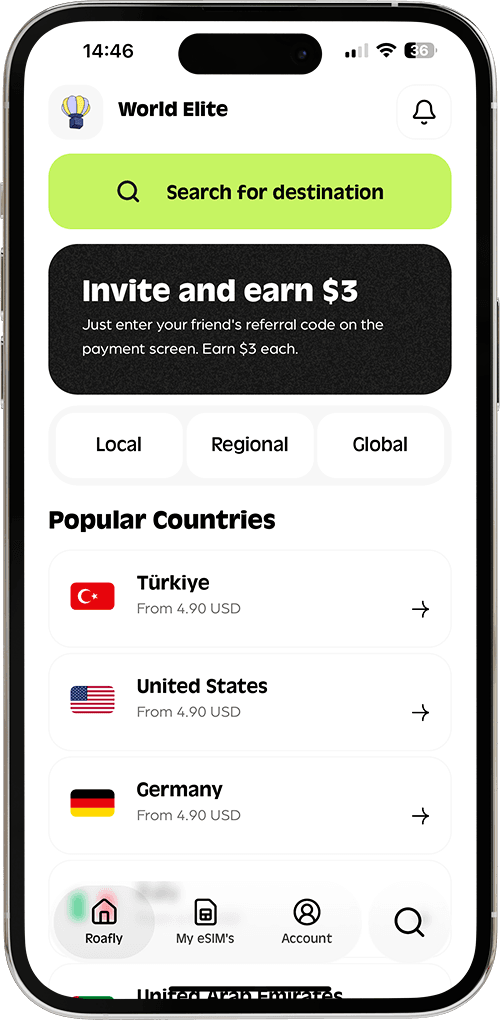
Create your order quickly
See your eSIM details
Track your remaining data
Download the App and manage your eSIMs easily
Create your order quickly
See your eSIM details
Track your remaining data
Germany is a top destination for travelers, offering everything from the vibrant streets of Berlin to the scenic landscapes of Bavaria.
O2, Vodafone
Instant delivery
From 3.90 USD

Lena Hartley
Updated Jan 21, 2026
9 min read

Jump to section
👇Best for most trips
O2, Vodafone

Germany
10 GB · 30 days
Enough for maps, bookings and everyday travel.
Hotspot supported
$14.00
From 3.90 USD
However, for a country known for its engineering prowess, getting a reliable mobile internet connection can be surprisingly complicated for tourists. The locals even joke that the internet is "Neuland" (uncharted territory) here, referring to the infamous dead zones and bureaucracy.
If you are planning a trip to Germany in 2026, staying connected is essential for navigation, translation, and sharing your memories. This guide covers every method to get online, from expensive airport SIM cards to the modern, hassle-free eSIM solution.
Choose the perfect data plan for your trip
Before purchasing a plan, it is helpful to understand the network providers. Germany has three main network operators: Telekom (D1), Vodafone (D2), and O2 (Telefónica). A fourth player, 1&1, is also rolling out its 5G network but relies heavily on roaming agreements.
Telekom: generally offers the best coverage and fastest speeds, especially in rural areas, but it is the most expensive.
Vodafone: is a strong runner-up with excellent city speeds.
O2: is often the most budget-friendly but can have spotty signal in remote countryside areas or on high-speed trains.
For many travelers, the instinct is to buy a SIM card immediately upon landing. In Germany, this is usually possible at major hubs like Frankfurt (FRA) or Munich (MUC), but it comes with significant downsides.

At Frankfurt Airport, you will mostly find reseller shops (often electronics stores) rather than official carrier stores in the arrival halls. In 2026, the prices here are significantly inflated compared to street prices.
Frankfurt/Munich Airport Pricing: Expect to pay between €40 and €50 ($42–$53 USD) for a tourist SIM card with a decent data package (e.g., 10GB–15GB).
The "Tourist" Markup: Retailers at airports know you need connectivity immediately, so they charge a premium. You might find a generic "Europe Data SIM" rather than a local German deal.
While convenient, this is the most expensive way to get online. If you are on a budget, we recommend avoiding airport kiosks.
If you leave the airport and visit a city center, you can find much cheaper prepaid options at supermarkets (like Aldi, Lidl) or carrier shops (Telekom, Vodafone, O2).

This is where things get tricky for tourists. German law requires every SIM card to be registered to a verified individual. You cannot simply buy a card, insert it, and browse. You must go through an Ident-Check.
PostIdent: This involves going to a German post office with your passport.
VideoIdent: You verify your identity via a video call on your phone. This requires a stable Wi-Fi connection (which you might not have yet) and a passport that security protocols can easily read.
Many travelers report frustration with VideoIdent agents rejecting foreign passports due to glare or language barriers.
Telekom MagentaMobil Prepaid: Approx. €9.95 for 8GB.
Vodafone CallYa: Approx. €9.99 for 10GB.
Aldi Talk (O2 Network): Approx. €8.99 for 10GB.
While the data is cheap, the time and stress of activation often outweigh the savings for short-term visitors.
For most travelers in 2026, an eSIM (embedded SIM) is the superior choice. It eliminates physical cards, store visits, and the dreaded German ID verification process. Roafly offers a streamlined experience specifically designed for tourists.
Roafly Germany eSIM connects you to premium German networks without the markup of roaming fees. Because Roafly handles the technical side, you do not need to show your passport or perform a VideoIdent call. You simply scan a QR code (or use the Direct Install on iOS), and you are connected the moment you land.
Instant Activation: Buy it before your flight, activate it upon landing.
Cost-Effective: Packages start from just a few dollars, far cheaper than airport SIMs.
Flexible Data: Choose a plan that fits your trip length, from a weekend in Berlin to a month-long Eurotrip.
High-Speed Data: Roafly provides 4G/5G speeds, ensuring you can use maps and streaming apps without lag.
If you are still weighing your options, we tested and compared the top brands side-by-side. Read our honest review on the Best eSIM for Germany to find the absolute best value for your trip.
Pocket Wi-Fi (mobile hotspot) was a popular choice a decade ago. It allows you to connect multiple devices to a single portable router.

This option is reliable if you are traveling with a large family and need to connect 5+ devices. However, you must carry an extra gadget, keep it charged, and—most crucially—pay a hefty rental fee and deposit.
Cost: Rentals average €5–€8 per day, plus a deposit of €100+.
Convenience: You must return the device by mail or at the airport before you leave, which adds another item to your departure checklist.
To help you decide, here is a comparison of the four main methods for getting online in Germany in 2026.
Best for most trips
O2, Vodafone
Germany
10 GB · 30 days
Enough for maps, bookings and everyday travel.
Hotspot supported
$14.00
From 3.90 USD
Note: Prices and conditions are based on January 2026 market research. Airport prices refer to reseller shops at Frankfurt/Munich. Local SIM requires mandatory government ID registration.
Germany is famous for its "Funkloch" (dead zones). While major cities like Munich, Hamburg, and Berlin have excellent 5G coverage, signal can drop in rural areas or on the train between cities. Roafly users benefit from connecting to top-tier partner networks, minimizing these drops.
Most German trains (DB - Deutsche Bahn) offer free Wi-Fi (WIFIonICE), though it can be unstable. Hotels and cafes usually offer free connection, but public Wi-Fi is less ubiquitous than in countries like the USA or South Korea due to strict privacy laws.
To make your data last longer, download offline maps for Google Maps and offline languages for Google Translate while you are still on Wi-Fi. If you are unsure how much data you need, you can check a data usage calculator or start with a medium-sized package from Roafly and top up if needed.
Germany has a reputation for world-class engineering, but its mobile network coverage has historically been a topic of heated debate. While the situation has improved drastically by 2026, understanding the landscape is crucial for travelers who plan to venture beyond the city centers of Berlin or Munich.

Unlike some countries with a single dominant state provider, Germany’s mobile infrastructure is divided primarily among three established giants and one ambitious newcomer.
Telekom is widely regarded as the premium provider in Germany. It operates the "D1" network, which consistently wins independent tests for both coverage and speed.
Best For: Travelers planning to visit rural areas, hike in the Bavarian Alps, or take long train journeys.
Coverage: It offers the most extensive LTE and 5G coverage, minimizing the dreaded "No Service" spots in the countryside.
Speed: generally provides the fastest download speeds, often exceeding 1 Gbps in 5G-enabled areas.
Roafly Connection: Roafly prioritizes premium connections to ensure you benefit from this top-tier infrastructure where available.
Vodafone is the second-largest operator and runs the "D2" network. It is a fierce competitor to Telekom and often matches it in urban environments.
Best For: City breaks and general travel. Vodafone is extremely strong in metropolitan areas like Frankfurt, Hamburg, and Düsseldorf.
Performance: While slightly less consistent than Telekom in deep rural pockets, it offers high-speed 5G connectivity that is more than sufficient for streaming and video calls.
For years, O2 was considered the budget option with significantly weaker coverage. However, massive infrastructure investments have closed the gap.
Best For: Urban travelers on a budget. If you are sticking to major cities, O2 works perfectly fine.
Limitations: You might still experience signal drops when traveling on high-speed trains (ICE) or in remote villages (e.g., in the Black Forest region) compared to D1 or D2 networks.
1&1 is the newest (fourth) network operator in Germany. As of 2026, they are still in the process of building their own antenna infrastructure.
Status: They rely heavily on "National Roaming" agreements (using Vodafone's or O2's network) where their own towers are not yet built. For a short-term tourist, specifically seeking out 1&1 is rarely necessary or advantageous compared to the established players.
[Image Suggestion: A coverage map graphic of Germany, stylistically highlighting strong signals in major cities like Berlin, Munich, and Hamburg, fading slightly in the dense forest regions.]
Germany is famous for the term Funkloch (literally "radio hole"). Despite 98% household coverage, geographic coverage still has gaps.
Train Travel: The most common place tourists encounter dead zones is on the Deutsche Bahn (trains). The metallic coating on train windows blocks signals, and while repeaters are installed, switching between cell towers at 300 km/h can cause brief disconnects.
Forests and Valleys: In regions like the Black Forest or the Mosel Valley, topography can block signals.
Germany has aggressively rolled out 5G. In 2026, you can expect 5G signals in almost every town and city.
Standalone 5G: Most networks now offer "Standalone 5G" (5G SA), which provides lower latency—great for gaming or urgent video calls.
Roafly Advantage: With a Germany eSIM, your device is compatible with these modern standards, ensuring you aren't stuck on older, slower 4G networks when 5G is available.
Getting internet in Germany doesn't have to involve expensive airport kiosks or frustrating video identification calls. While local SIM cards are cheap, the activation hurdles make them unsuitable for short trips.
For the modern traveler in 2026, Roafly offers the perfect balance of price, performance, and convenience. You get immediate access to high-speed internet without the bureaucracy, allowing you to enjoy your German adventure from the very first minute.
Check the latest eSIM packages for Germany and stay connected effortlessly.

Manage your eSIM in the app
Install, top up and track data.
Choose the perfect data plan for your trip
Manage your eSIM in the app
Install, top up and track data.
