

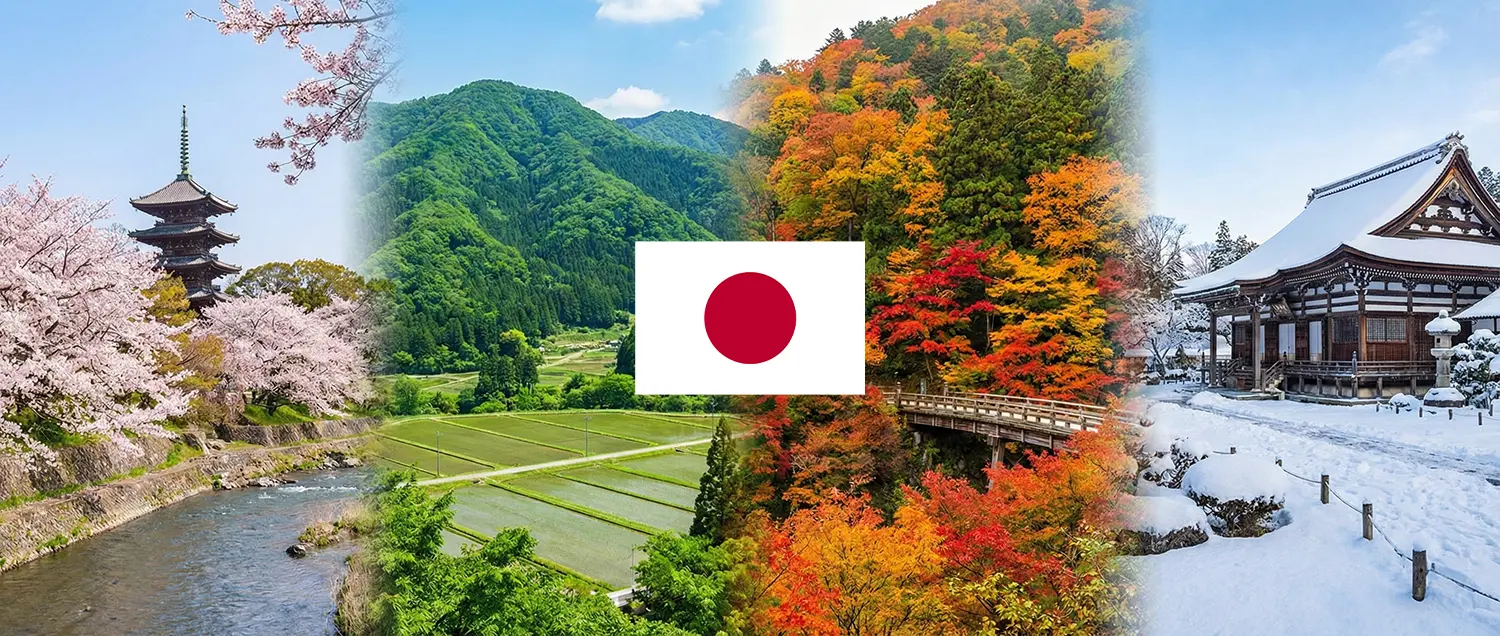
Översikt: Hur Japans årstider fungerar
Japan sträcker sig över en lång nord-sydlig latitud, vilket skapar dramatiska klimatvariationer. Tokyo, Kyoto och Osaka följer ett tempererat mönster med fyra årstider, medan Hokkaido upplever långa snöiga vintrar och Okinawa njuter av subtropiskt väder.
I allmänhet:
-
Bäst överlag: Vår (mars–maj) och höst (september–november)
-
Minst trångt: Vinter (januari–februari) och tidig sommar före skolledigheterna
-
Dyrast: Högsäsong för sakura och sen höstfärgning
-
Mest oförutsägbart väder: Regnperiod (juni–juli) och tyfonperiod (sen sommar)
Vår (mars–maj)
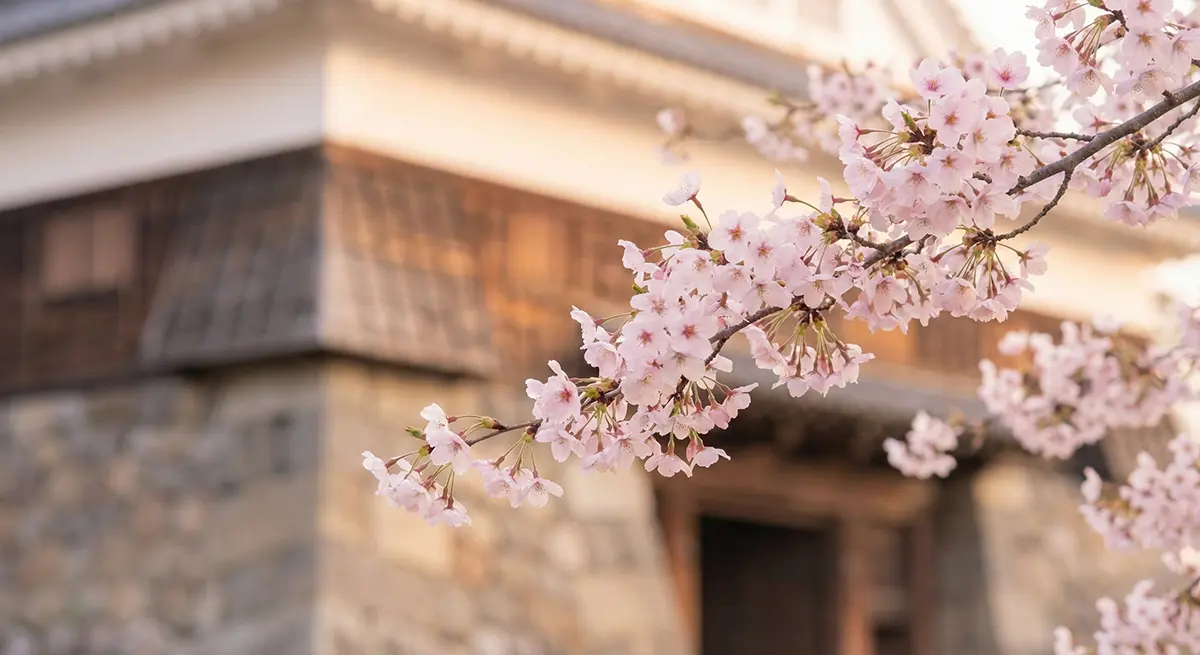
Våren är den mest ikoniska tiden att besöka Japan. Mild temperatur, blommande körsbärsblommor och livligt stadsliv gör det till det bästa valet för förstaklassresenärer.
Väder
-
Genomsnittliga temperaturer: 10–20°C beroende på region
-
Krispiga morgnar, varma eftermiddagar
-
Låg luftfuktighet, klara himlar
Varför besöka på våren?
-
Körsbärsblomning (“sakura”) säsong
Blomningstiden varierar beroende på region:-
Slutet av mars: Tokyo, Kyoto, Osaka
-
April: Norra Japan
Säsongen varar endast 1–2 veckor per plats, och boende tar slut tidigt.
-
-
Festivaler & uteliv
Vår matsuri, picknick vid sjöar, historiska trädgårdsevenemang. -
Bäst för: Förstagångsresenärer, fotografering, stadsresor, kulturella resor.
Saker att tänka på
-
Det är den mest hektiska reseperioden efter nyår.
-
Hotell och flyg kan öka kraftigt.
-
Boka tågbiljetter, hotell och intercity-biljetter i god tid.
Sommar (juni–augusti)
Sommaren ger energi, festivaler och frodiga landskap — men också värme, fuktighet och regnperiod.
Väder
-
Temperaturer: 25–35°C i städer
-
Hög luftfuktighet
-
Regnperiod (tsuyu) vanligtvis från mitten av juni till mitten av juli
-
Tyfoner är vanligast mellan slutet av augusti och september
Varför besöka på sommaren?
-
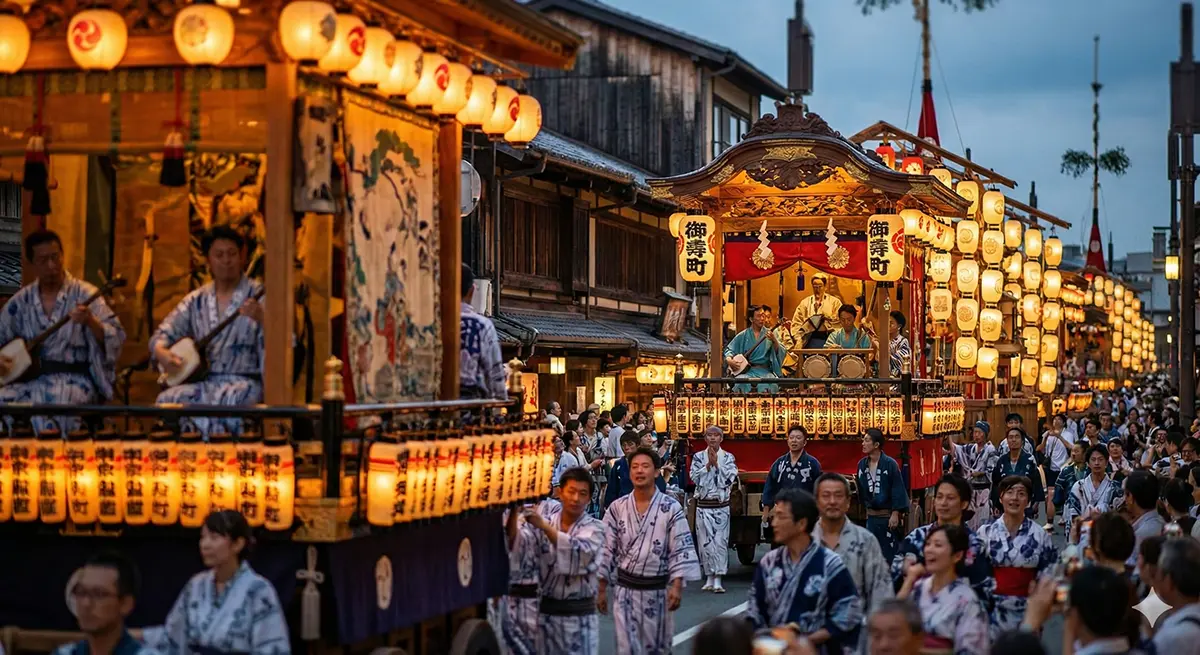
Traditionella festivaler (matsuri)
Gion Matsuri, Nebuta Matsuri, Tenjin Matsuri — några av Japans mest spektakulära kulturevenemang äger rum på sommaren. -
Hokkaido & bergflykter
Norra Japan förblir mild och är perfekt för vandring, djurliv iakttagelse och roadtrips. -
Bäst för: Festivalälskare, utomhusäventyrare, fotografering av frodiga landskap.
Saker att tänka på
-
Tokyo, Kyoto och Osaka kan kännas överväldigande fuktiga.
-
Förvänta dig periodiskt regn och möjliga reseförseningar under tyfoner.
-
Om ditt mål är stadsbesök kan en annan säsong vara mer bekväm.
Höst (september–november)
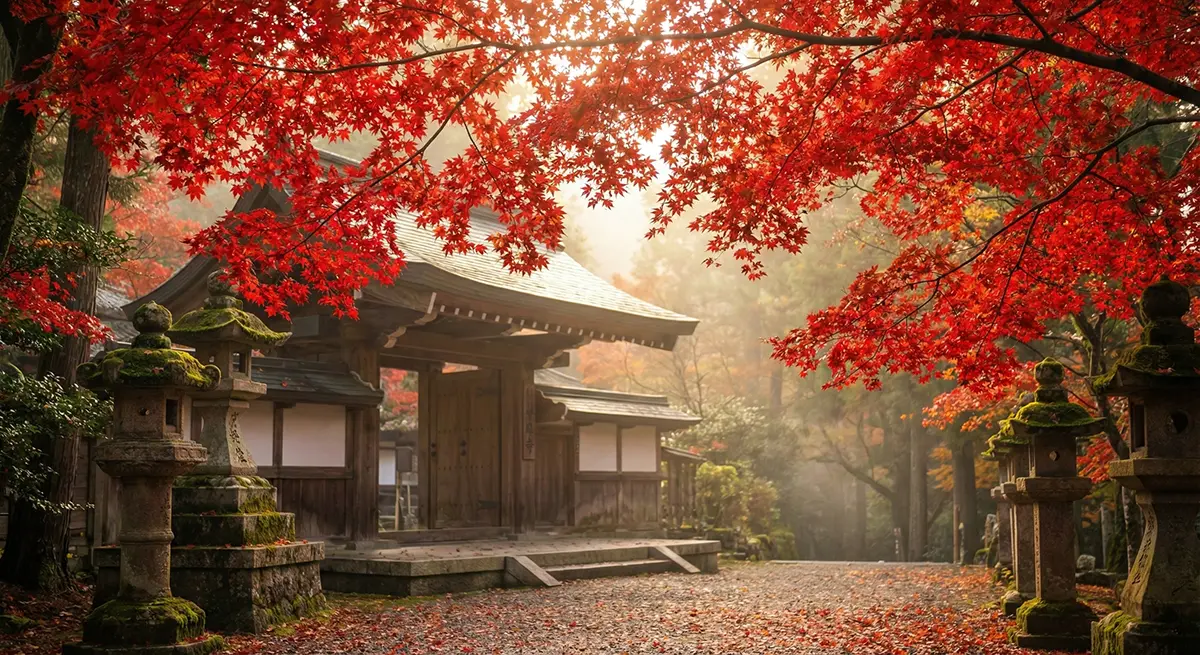
Många återkommande besökare hävdar att hösten är ännu bättre än våren. Temperaturen är behaglig, himlen är klar och höstlöven (“koyo”) förvandlar Japan till ett djupt rött och guldigt landskap.
Väder
-
Temperaturer: 15–25°C i de flesta regioner
-
Låg luftfuktighet
-
Krispiga kvällar, stabila vädermönster
Varför besöka på hösten?
-
Höstlöv (koyo)
-
Sent oktober–november: Kyoto, Osaka, Nara
-
November–december: Tokyo
Skogar, tempel och bergsdalar blir otroligt fotogeniska.
-
-
Perfekt för utomhusresor
Vandring i Nikko, cykling i Hakone, landsbygdsboende, historiska sevärdheter. -
Bäst för: Par, fotografer, matresenärer, kulturella resor.
Saker att tänka på
-
Höstens lövverkssäsong är bland de mest trånga perioderna i Kyoto.
-
Hotell nära stora sevärdhetsrutter blir snabbt fullbokade.
Vinter (december–februari)
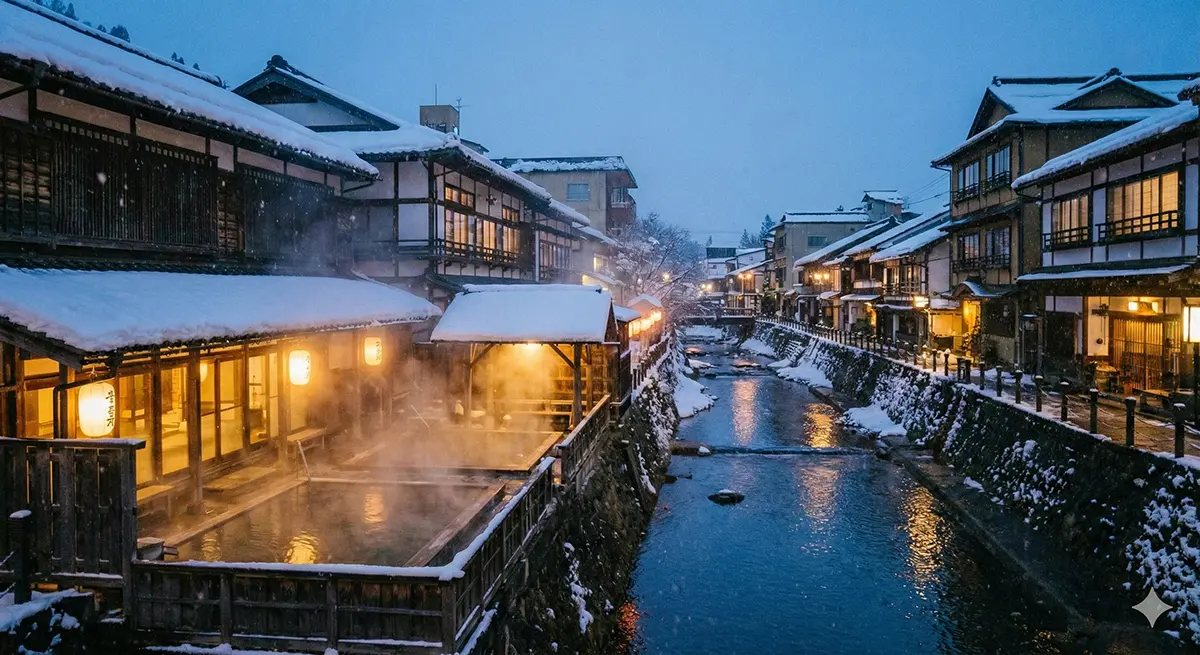
Vintern i Japan är kallare, tystare och otroligt atmosfärisk. Det är den bästa säsongen för snö, onsen-kultur, vintersporter och traditionella byar.
Väder
-
Temperaturer: 0–10°C i städer
-
Hokkaido och de japanska Alperna får kraftig pudersnö
-
Krispig, torr luft med klara blå himlar
Varför besöka på vintern?
-
Världsklass skidorter
Hokkaido (Niseko, Furano) och Nagano erbjuder några av de bästa snöförhållandena på jorden. -
Varma källor (onsen)
Att sitta i en utomhus onsen omgiven av snö är en klassisk japansk upplevelse. -
Belysningsfestivaler
Städerna lyser upp med vinterträdgårdar, LED-tunnlar och säsongsbetonade gatudesign. -
Bäst för: Skidåkare, onsen-sökare, resenärer som vill undvika folkmassor, budgetmedvetna besökare.
Saker att tänka på
-
Norra områden kan uppleva transportförseningar under kraftig snö.
-
Vissa landsbygdsattraktioner stänger eller har kortare öppettider.
Välja den bästa tiden beroende på resetype
Om du vill ha ikoniskt Japan:
Vår eller Höst — sakura eller koyo ger dig de mest vykorts-värdiga vyerna.
Om du vill ha festivaler:
Sommar — de största kulturella evenemangen äger rum mellan juli och augusti.
Om du vill åka skidor eller besöka onsens:
Vinter — särskilt Hokkaido, Nagano och Tohoku.
Om du vill ha färre folkmassor & lägre priser:
Vinter (januari–februari) eller tidig sommar efter regnperioden.
Regionala väderförändringar: Japans klimat varierar mer än de flesta resenärer förväntar sig
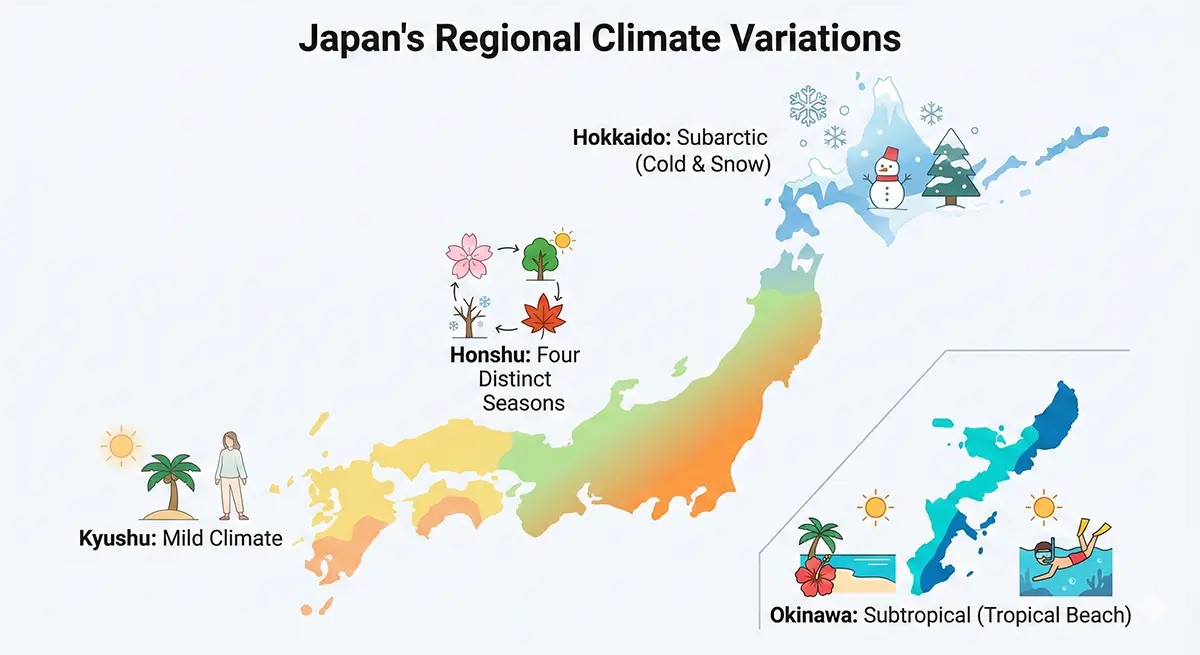
Japans geografi sträcker sig från subarktiska Hokkaido till subtropiska Okinawa, vilket innebär att den “bästa tiden att besöka” inte är densamma för varje region. Att förstå dessa skillnader hjälper dig att utforma en realistisk resplan.
Hokkaido (norr)
Hokkaido upplever långa vintrar och svala somrar.
-
Bästa tiden: Vinter för skidåkning; juli–augusti för vandring
-
Undvik: Tidig vår (smältande snö, brunare landskap)
-
Höjdpunkter: Niseko skidorter, Furano lavendelfält, Shiretoko nationalpark
Tokyo, Kyoto, Osaka (Centrala Honshu)
Denna region följer det klassiska mönstret med fyra årstider.
-
Bästa tiden: Vår & höst
-
Undvik: Sen juli–augusti värme & fuktighet
-
Höjdpunkter: Sakura-säsong, tempel, matkultur, stads sightseeing
De japanska Alperna (Nagano, Gifu)
Bergsvädret är kallare och snöigare.
-
Bästa tid: Vinter för skidåkning, sommar för vandring
-
Undvik: Regnperiod (branta dalar = moln + minskad sikt)
-
Höjdpunkter: Snömunkar, alpinvägar, onsenstäder
Kyushu (Fukuoka, Nagasaki, Kagoshima)
Mildare vintrar, varma somrar.
-
Bästa tid: Vår & Höst
-
Undvik: Tyfonbenägen sen sommar
-
Höjdpunkter: Vulkanlandskap, onsen-kultur, varmt klimat
Okinawa (Syd)
Tropiska stränder och havsaktiviteter.
-
Bästa tid: April–juni & oktober–november
-
Undvik: Peak tyfonaktivitet (augusti–september)
-
Höjdpunkter: Korallrev, snorkling, avslappnad ö-livsstil
Säsongsbetonade resplaner (För första gången & återkommande besökare)
Vår Sakura-resplan (7–10 dagar)
- Dag 1–3: Tokyo — Ueno Park, Meguro River, Rikugi-en
-
Dag 4–6: Kyoto — Filosofens väg, Maruyama Park
-
Dag 7–8: Osaka & Nara — slott + sakura utsiktsplatser
-
Valfritt: Förläng till Hokkaido för sent blommande blommor
Sommarfestival & Naturresplan (7–12 dagar)
- Tokyo → Kyoto för Gion Matsuri
-
Tåg till Osaka för Tenjin Matsuri
-
Flyg till Hokkaido för vandring och svalare väder
Höstfärger-resplan (8–10 dagar)
- Kyoto tempel (Tōfuku-ji, Eikan-dō)
-
Nara Park
-
Nikko eller Hakone för bergens färger
-
Tokyo för sent säsongsfärger
Vinter skid- & onsen-resplan (7–10 dagar)
- Tokyo → tåg till Nagano Alperna eller flyg till Hokkaido
-
Skidåkning i Niseko eller Hakuba-dalen
-
Snöapor i Jigokudani
-
Avsluta med en traditionell ryokan & onsen vistelse
Praktiska resetips
Boka tidigt för vår och höst
Dessa perioder är globalt populära. Tåg, hotell och attraktioner kan nå full kapacitet veckor i förväg.
Tänk på väderanpassade kläder
-
Vår: lätta lager
-
Sommar: andningsbara tyger + solskydd
-
Höst: lätta jackor
-
Vinter: isolerad jacka + vattentåliga skor
Förstå regn- & tyfonperioderna
Japans regnperiod är förutsägbar och hanterbar, men skurar kan påverka utomhusplaner.
Tyfoner påverkar mest kustområden & södra regioner.
Använd tåg strategiskt
Japans järnvägssystem är effektivt, men hektiska säsonger kan innebära folkmassor. Sittplatsreservationer rekommenderas under sakura- och koyo-perioderna.
Hur man håller sig uppkopplad i Japan: Det mest bekväma alternativet för resenärer
Japan förlitar sig starkt på digital navigering, kontantlösa betalningar, live-översättning och tågvägsappar — vilket innebär att du behöver konstant internetåtkomst från det ögonblick du landar.
Det enklaste alternativet är eSIM, vilket undviker köer på flygplatsen, språkbarriärer och fysiska SIM-kortsbyten. Installation är omedelbar, och täckningen över hela Japan är mycket pålitlig.
Om du behöver en fullständig steg-för-steg-guide om mobil internetalternativ,
läs också: Hur man får mobil internet i Japan: Komplett guide för resenärer
För bekvämlighet, här är var Roafly naturligt passar in:
-
Snabb installation (QR, manuell, direkt installation)
-
Täckning över alla större städer & landsbygdsområden
-
Idealisk för resplaner med mycket navigering
Jämförelsetabell: När man ska besöka Japan efter säsong
| Säsong | Väder | Folknivåer | Bästa för | Överväganden |
|---|---|---|---|---|
| Vår (Mar–Maj) | Mild, blommande sakura | Mycket hög | Första gången, fotografering, kultur | Dyrt, kräver tidig bokning |
| Sommar (Jun–Aug) | Varmt, fuktigt, regnig start | Måttlig–Hög | Tyfoner, värmeböljor | |
| Höst (Sep–Nov) | Kyligt, klart, lövverk | Hög (Okt–Nov) | Par, natur, kultur | Kyoto extremt trångt |
| Vinter (Dec–Feb) | Kallt, snöigt norr | Låg | Skiing, onsens, budgetresor | Transportförseningar vid kraftig snö |
Slutsats
Japan är en destination året runt — den bästa tiden att besöka beror helt på vad du vill uppleva.
Välj vår för ikonisk sakura, hösten för oförglömligt lövverk, vintern för skidåkning och onsen-äventyr, eller sommar för festivaler och äventyr i norr.
Kontrollera tillgängliga Japan eSIM-paket innan din resa för att hålla dig ansluten utan ansträngning i hela Japan.
Vanliga frågor om den bästa tiden att besöka Japan
När är den absolut bästa tiden att besöka Japan?
Vår (mars–april) och höst (oktober–november) anses generellt vara de bästa tiderna att besöka på grund av det bekväma vädret och ikoniska landskap som körsbärsblommor och höstlöv.
Är vintern en bra tid att besöka Japan?
Ja — särskilt om du gillar skidåkning, snowboard eller att bada i varma källor (onsen). Norra Japan och de japanska Alperna har världsklass puder snö från december till februari.
Är sommaren för varm i Japan?
I stora städer som Tokyo, Kyoto och Osaka kan sommaren vara varm och fuktig. Men sommaren är idealisk för festivaler och för att utforska Hokkaido, som är svalare.
När är regnperioden i Japan?
Japans regnperiod (tsuyu) inträffar vanligtvis från mitten av juni till mitten av juli. Regnet varierar beroende på region, och resande är fortfarande mycket möjligt med rätt planering.
När inträffar körsbärsblomssäsongen?
Körsbärsblommor blommar mellan slutet av mars och början av april i de flesta stora städer. Norra regioner som Hokkaido blommar senare, vanligtvis i mitten till slutet av april.
När är den billigaste tiden att besöka Japan?
Januari–februari och delar av tidig sommar tenderar att erbjuda de lägsta priserna på hotell och flyg. Högsäsonger som sakura och höstlöv är betydligt dyrare.
Vad är den sämsta tiden att besöka Japan?
Det finns ingen verkligt “dålig” tid, men sen sommar (augusti–september) kan föra med sig tyfoner, och mitt i sommaren kan det kännas extremt fuktigt i städerna.
Är hösten verkligen mindre trångt än våren?
Inte nödvändigtvis. Kyoto och populära lövverkplatser kan vara lika trånga som sakurasäsongen — ibland mer. Tidig november är särskilt hektisk.
Har olika regioner olika bästa besökstider?
Ja. Hokkaido är utmärkt på vintern och sommaren; Okinawa är bäst på våren och sen höst; Tokyo, Kyoto och Osaka lyser på våren och hösten.
Behöver jag internetåtkomst för att resa runt i Japan?
Ja. Navigeringsappar, tåg scheman, restaurangbokningar och översättningsverktyg kräver alla en stabil datakoppling. Ett eSIM är det mest bekväma sättet att hålla sig ansluten under hela resan.
Kan jag använda ett eSIM istället för att köpa ett SIM-kort på flygplatsen?
Absolut. eSIM fungerar omedelbart vid ankomst, undviker köer på flygplatsen och ger pålitlig täckning i stora japanska städer och landsbygdsdestinationer.